


 Apple Podcasts
 Castro
 RSS Feed
 Spotify
 Amazon Music
 Is Anti-Fat Bias Making Us Sick? | Big Sexy Chat with Ragen Chastain
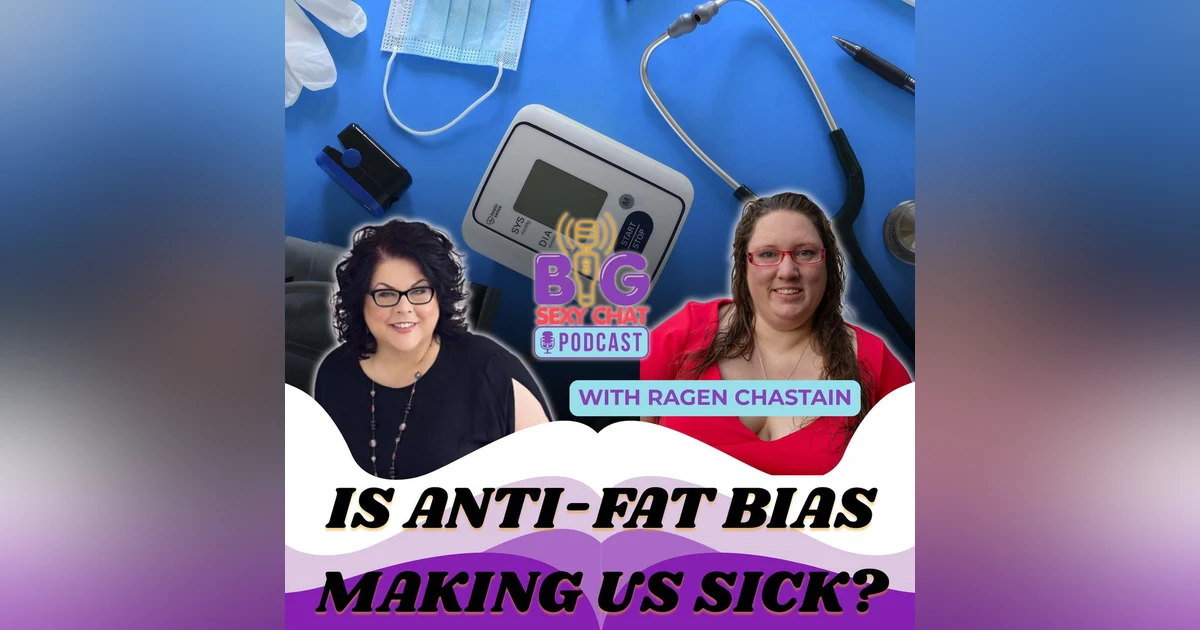
Send us Fan Mail What if the stigma surrounding fat bodies is itself a health issue? Chrystal sits down with writer, speaker, patient advocate, and weight-stigma educator Ragen Chastain for a deep conversation about anti-fat bias, healthcare, BMI, medical research, GLP-1 medications, weight-loss culture, racism, and the ways the weight-loss industry shapes the conversation around fat bodies. We talk about why shame doesn't work, why “everybody knows” isn't evidence, who gets represented in me...
Key Takeaways
- Experiencing weight stigma is physically and psychologically harmful, and decades of research show it is independently linked to the exact health issues unfairly blamed solely on higher body weight.
- The weight loss industry actively co-opts anti-weight stigma campaigns, such as Novo Nordisk's 'It's Bigger Than Me' initiative, to manipulate public policy and push for insurance coverage of expensive weight-loss drugs.
- Much of the medical system's tools, surgical techniques, and research were built using data that excluded higher weight individuals, people of color, and women, leading to medical bias and delayed real treatments.
- Weight cycling or yo-yo dieting, which is the most common outcome of weight loss attempts, is a major confounding variable that standard weight-health research frequently ignores.
- Chrystal and Ragen Chastain emphasize the critical difference between fighting your natural body and fighting the systemic weight stigma that taught you your body needed to be fought in the first place.
What if the stigma surrounding fat bodies is itself a health issue?
Chrystal sits down with writer, speaker, patient advocate, and weight-stigma educator Ragen Chastain for a deep conversation about anti-fat bias, healthcare, BMI, medical research, GLP-1 medications, weight-loss culture, racism, and the ways the weight-loss industry shapes the conversation around fat bodies.
We talk about why shame doesn't work, why “everybody knows” isn't evidence, who gets represented in medical research, how BMI became so influential, and what happens when healthcare systems are built around assumptions about fat bodies.
Ragen also talks about her work with Louise Adams on Exposing Obesity Incorporated, a podcast examining the weight-loss industry's influence and messaging.
Most importantly, we talk about what happens when we stop treating fat bodies as problems that need to be fixed.
Your body is not wrong.
CHAPTERS
00:00 Welcome + Ragen Chastain
02:31 Is Anti-Fat Bias Making People Sick?
03:27 Why Shame Doesn't Work
04:52 The Weight-Loss Industry's Playbook
07:22 Exposing Obesity Incorporated
09:04 “Oh Please”
10:14 Industry Influence
11:24 Weight Stigma & Healthcare Inequality
13:20 Repetition & “Common Knowledge”
14:04 Anti-Stigma as Marketing
15:14 Fat Patients & Medical Bias
17:14 Educating Healthcare Providers
19:06 GLP-1s
20:37 Cortisol & Stress
22:15 Racism & Anti-Blackness
23:09 Medical Research & Fat Bodies
24:46 The “150-Pound White Guy” Problem
27:25 “Everybody Knows”
28:36 Is Fatness a Disease?
30:31 Genetics & Weight Regain
31:41 The History of BMI
34:00 The Origins of Weight-Loss Culture
35:08 The Lifelong Disease Narrative
36:07 Moving the Goalposts
38:35 Informed Consent
39:15 Race, BMI & Anti-Fatness
40:30 Fighting Your Body vs. Fighting Stigma
42:20 Weight-Stigma Research & Industry Funding
43:29 Find Ragen
45:16 Catching Up
47:00 Goodbye
BigSexyChat.com appreciates you and our community. We do this for you, so if you ever have any ideas about a subject we can discuss for you, email us at bigsexychatpod@gmail.com.
You can find us on Facebook and Instagram as BigSexyChat.
Twitter (who knows how long we will stay there) is BigSexyChatPod
Check out our merch at www.BigSexyTees.com (credit to Toni Tails for setting this up for us!)
Chrystal also sells sex toys via her website BlissConnection.com and you can use the code BSC20 for 20% off.
Big thanks to our Sponsor Liberator Bedroom Adventures. We ADORE the products from Liberator. And, to be clear, we all loved their products even before they became a sponsor!
Frequently Asked Questions
Is anti-fat bias making people sick?
Yes, extensive research shows that experiencing weight-related stigma and discrimination causes chronic stress, elevated cortisol, and adverse health outcomes that are often falsely attributed directly to a person's weight.
Who is Ragen Chastain and what is her work about?
Ragen Chastain is a writer, speaker, patient advocate, and weight-stigma educator whose work focuses on the intersections of weight science, weight stigma, health, and healthcare.
What is the podcast Exposing Obesity Incorporated about?
Exposing Obesity Incorporated is a podcast hosted by Ragen Chastain and Louise Adams that airs the weight-loss industry's dirty laundry, examining its influence, marketing playbooks, and messaging around fat bodies.
How do GLP-1 medications for weight loss differ from diabetes treatments?
While GLP-1 medications can be solid Type 2 diabetes treatments at lower doses for glycemic control, weight-loss protocols often use mega-doses to maximize side effects like weight loss, which significantly increases dose-dependent risks.
00:00 - Welcome And Guest Introduction
03:05 - Why Shame Backfires On Health
06:19 - The Weight Loss Industry Playbooks
12:14 - Stigma Confounders Research Ignores
16:19 - How Bias Delays Real Treatment
20:04 - GLP-1 Drugs And Dose Decisions
24:13 - Medicine Built Without Fat Bodies
28:01 - Obesity As Disease And Anchor Bias
32:23 - BMI Origins And Racist Frameworks
38:01 - Informed Consent And The Diet Myth
44:02 - Where To Find Reagan
46:08 - Subscribe And Support The Show
Welcome And Guest Introduction
SPEAKER_00On this episode of Big Sexy Chat, we're going to be having a conversation we've been wanting to have a long time. Today, we're talking to Reagan Chastain, who has spent years researching and educating people about weight stigma, healthcare, medical research, and the weight loss industry. We get into GOP1's, BMI, healthcare bias, medical research, racism, anti-blackness, informed consent, and the ways the weight loss industry has gotten really damn good at shaping the conversation around fat bodies. And we're also talking about something we think is really important the difference between fighting your body and fighting the stigma that taught you your body needed to be fought in the first place. So grab your headphones, get comfortable, and come sit with us. This is Big Sexy Chat.
SPEAKER_01Hi there, Crystal from Big Sexy Chat. Welcome back to our podcast. Excited to have Reagan Chastain with me tonight. Hi, Reagan. Hey, Crystal, good to see you. Thank you, you too. I'm gonna tell everybody a little bit about you in case they don't know you. I always think that, of course, everybody knows you, like I do with Tigris too, and saucy as well. I think everybody knows them. And I do want to talk a little bit about um if people are new to you, maybe where you could send them and where we should send them. But I want to just say your weight and healthcare um substack also had a bit of like a podcast sense to it, right? We could listen to you or read you. But your newest podcast that you're doing with Louise Adams, is that her lesson? Yeah, love it, and I love her word opesity instead of the other word. So it's called exposing oplicity, obesity, incorporated, meaning like the well-oiled machine of the industrial complex of Norvo, Norvo, whatever the hell they're called, and uh all those other crazy drug companies that want us to feel like shit about ourselves. So love that. And um weight and healthcare, though, that's your main currently your main uh blog and podcast, Substack. And then, of course, you're a writer, a speaker. I know you're a patient advocate officially, right? You used to do iron with the iron call, iron man uh yeah.
SPEAKER_02So I did marathons and triathlons. I trained for an Iron Man triathlon and never ended up getting to do it. I was scheduled finally after years of trying for uh May 2020.
unknownRight.
SPEAKER_02And then obviously that did not happen.
SPEAKER_01It's like my day job, you know. I was open for six months and then closed for 13 months because I opened my electrology practice six months before the shutdown.
SPEAKER_02Oh no, it's okay.
SPEAKER_01I survived, you survived. It's we made it what it is, we made it. So yeah. So just in case someone is brand new to you, they've never heard of you, they've never read about you, and any of your controversial subjects that give health fat people deserve dignity, respect. Gosh, Reagan, geez, tell people how they might find you if they're new to you.
SPEAKER_02Sure. So I do a lot of different things, but all of my work centers around the intersections of weight science, weight stigma, stigma, health, and healthcare. And so weightandhealthcare.com is my substack. Weightandhealthcareinstitute.com is my organization. Those two websites can sort of point you to all of the other things, the writing and uh resources that I create.
Why Shame Backfires On Health
SPEAKER_01And we've talked with you a few times on the podcast now, and I I hear a lot about this, and I know people talk about a lot too on on socials, but you know, people are concerned about us fatties, sure they are, and they want to shame us. They feel like a little bit of shame would be good for us because maybe we wouldn't be so fat. And I ran across this article a few times over the last couple of years, and I'm sure they are. And they want to shame us, they feel like a little bit of shame would be good for us because maybe we wouldn't be so fat. And I ran across this article a few times over the last couple of years, and I'm like, you know what? I want to talk to Reagan about this. And I printed it out because I want to read the title exactly. This was uh by written by Dr. Renee English. England is anti-fat bias making people sick. I posit, yes, but just because I've been fat since the third grade and I'm 58 now, but they said news research finds that experiencing weight-related stigma may cause ill health. Shocked. Are you shocked?
SPEAKER_02I am not shocked because there is decades of research saying exactly that that experiencing weight stigma and even in many cases perception of weight stigma is independently linked with the same things that get blamed on being higher weight. And so that's I am yeah, I'm not shocked by another study that finds similar things.
SPEAKER_01No, I mean, it just to me, it just seems logical, of course. Anytime you shame people, it doesn't bring out I in fact I started researching. Like, does the shame help anything? I couldn't find anything that actually helps. It's not, it's always gonna be not good. It's always gonna for me, I think what I say to my trolls, if you don't want me to be so fat, stop shaming me because I'm probably going to gain weight from the stress of you freaking shaming me. Like, make up your mind. Do you want me fat or thin? Not that I really care, but you know what I mean? And just like as a point to like push back, if you keep shaming me, I'll probably gain, I'll probably gain more weight. I mean, why would that doesn't help anybody? It doesn't, we all know that's just common sense. Shaming people doesn't help anything.
SPEAKER_02Yeah, so shame is like not a good motivator for anything. I always want to be careful about the idea because the the weight loss industry has recently really locked on to this idea that weight stigma is bad because it might make people fatter or might make them less likely to participate in weight loss. And I always want to be really clear that because there's nothing wrong with being fat or becoming fatter, that's not why weight stigma is bad. Right. Like weight stigma is bad, first of all, because it's physically and psychologically harmful, right? And because stigma is wrong. But I always because uh, and well, as we talk, I'm sure we'll talk more about this, but the the weight loss industry right now is in a big fight to try to co-opt the entire idea and decades of work by actual fat positive folks about weight stigma, and they're trying to co-opt it to become another marketing strategy for weight loss and in particular weight loss drugs.
SPEAKER_01You talk a lot about their game plan, and I was thinking today, it reminds me a lot of Project 2025. There's some similarities there. It's like body fascism, they have a whole plan to use the O word and use our language to make us feel like I guess it's like gaslighting in a way, right?
The Weight Loss Industry Playbooks
SPEAKER_02Yeah, so and they they've really put together three main playbooks. So there's what the weight loss industry has always been doing, which is pushing to have just existing in a higher weight body be seen as a chronic lifelong disease. And then they've got the insulin playbook that Eli Lilly and Novo Nordisk ran to take a drug that's incredibly cheap to make and to make it so expensive that people died because they couldn't access it. And then they've got the Purdue Pharma playbook that they use to make oxycontent into this blockbuster drug. And so they're really like running these playbooks and expanding upon them in ways that are both obvious and also sort of behind the scenes and very uh, very, I guess, very unobvious, right? In ways that are hidden and secretive. And so that's a big part of the reason why Louise and I did the podcast, but just in general, I think it's hard to overstate how much the weight loss industry is trying to infiltrate and manipulate healthcare and public policy and politics.
SPEAKER_01And you're 100% right. There's nothing wrong with being fat or becoming fatter. But I'm just trying to, in a way, like use our own language and stupidity. Like, I really don't care if I get fatter, but just you, troll, want me to be thinner. I promise you, shaming me is not going to make me thinner. That's your goal. That's not my goal. But just no.
SPEAKER_02And to with trolls, you know, uh their stated goal is that they want us to be thinner, but what they really want is for us to suffer. They want to feel good about themselves by making us feel bad.
SPEAKER_01And have moral superiority over us. Yes, exactly.
SPEAKER_02Exactly.
SPEAKER_01No, you're not sorry. Oh, Steve. Yeah, troll. Troll Steve. Um tell us a little bit about your podcast with Luis.
SPEAKER_02Yeah, so we really wanted to put together a podcast that would expose the sorted underbelly, air the dirty laundry of the weight loss industry because there is a lot of it. And so we're in our first season, and the first season is really setting the scene behind the scenes. So, for example, Novo Nordisk in their 2015 annual report had a chapter about building the market for quote unquote obesity care from scratch. And they just said out loud that they couldn't their at that point, their GLP one weight loss drug was Saxenda. And they just said straight out that they couldn't reach the full profit potential of Saxenda without convincing everyone that quote unquote obesity is a disease. And then they went to a conference and they put on slides their plan, their three-step plan to get this done. And so we've been sort of following that thread, showing, you know, the different recordings, showing the patient trainings, so that people who the media is interviewing, who the media believes are patients, are actually trained marketing operatives who are spitting out the weight loss industry's marketing and talking points. And so that's really, and then as it goes along in further seasons, we're gonna be interviewing people who worked with the weight loss industry who have like insider knowledge of what they're doing and how they're doing it. So it's gonna be a constant uh flow of just airing that dirty laundry and exposing them and not allowing them to keep getting away with this.
SPEAKER_01Thank you to you and Louise both. And it's really fabulous. Um, could you also explain to everybody about the opesity? Because I think that's brilliant.
SPEAKER_02I know that was Louise's It is Louise's brilliant invention. Yeah. So we know that the word, quote, obesity is harmful, it's stigmatizing, and it's a construct that was created and is now being manipulated by the weight loss industry to create maximum profit and to make fat people into nothing more than a profit base for the weight loss industry. That said, we're trying to expose an industry that was made, built on this construct. And so we put it in the name of the podcast. We had so many talks about this, but we named the podcast Exposing Obesity Incorporated. But when we talk about it, we I tend to say, like, quote obesity, that's what I'll do for like my Substack. And then when we write it, we use an asterisk to replace the E. But Louise came up with the idea of oh please, which I love. I roll always implied. And so that is where that came from, and that's how we use it.
SPEAKER_01I wish people could see our eye rolls and me barfing when you talk about this plan. It's so devious. It's like I mean, it's like the project 2025.
SPEAKER_02It is, it's insidious, it's clear. It, you know, they've been executing this 10-year plan for 10 years now. And it was like we're gonna infiltrate healthcare, we're gonna infiltrate guidelines, we're gonna infiltrate government and policy. And you can watch exactly how they've done it in lockstep with their plan.
SPEAKER_01And when I read your Substack, I see how often these people benefit financially personally, not just their company, personally, as speakers and stuff like that. And they're they're all using the same playbook, they're all saying the same words. And you know, when people hear the same thing over and over again, there's other people that use a strategy we might be familiar with. And um, if you say something enough, people start to think it's common knowledge.
SPEAKER_02Yes, exactly.
SPEAKER_01And that's kind of what this article reminded me of. It's like people think it's common knowledge that if you're fat, of course, you're gonna have more cardiovascular disease, you're gonna have more diabetes. And it turns out there's not one single disease that only affects fat people. We all have the same exact diseases, but that's kind of like this plan that they're trying to. I just feel like they're stealing everything from us or using our stuff against us. It's pissing me off.
SPEAKER_02Girl, same. And it's that's exactly what they're trying to
Stigma Confounders Research Ignores
SPEAKER_02do. When we talk about these ideas, and the the wording that they've come up with is sometimes it's called weight-related health issues or quote unquote obesity-related health issues. And it's critical to understand that these same health issues are also weight stigma related and they're weight cycling related. And we know that weight cycling or yo-yo dieting is by far the most common outcome of any weight loss attempt, and they're healthcare inequality related. And so the research that tries to link being higher weight with health issues almost never even mentions these three obvious and well-studied confounding variables, let alone controlling or mitigating for them. And that's what happens when you get research that's created by people who are either personally profiting, and I think there are people out there making just bad research for money that is happening. But there are also the people who, to your point, have been indoctrinated by the weight loss industry. And you hear, like, oh, economists say this, and government uh officials say this, and scientists say this, and doctors say this. And what you don't understand is all of those people were trained with the same talking points from the weight loss industry. So it seems like everyone agrees, but really everyone's just been indoctrinated with the same information. And so that's how you get research that doesn't do the basic things that research is supposed to do.
SPEAKER_01Every time I heard the word indoctrination yesterday and today, when I was reading, listening to some of your stuff, I'm like, I want to make a song like indoctrination. They are all indoctrinated, right? Just like they're trying to indoctrinate all of us, just like the beauty does industry does, right? Feel like crap about your body, feel like crap about your skin, feel like crap about your eyebrows, your eyelashes, you must have eyelash extensions. It's very similar. They're trying to make us feel really bad about our bodies without really even sometimes it's just repeated so many times. We assume, well, of course, all fat people have heart disease, of course, because we hear it all the time. And it's just like they repeat, repeat, repeat, and that's how they seem to brainwash us.
SPEAKER_02Yeah. My friend CJ Laguerre once said that they steal our self-esteem and they sell it back to us at they cheapen it and sell it back at a profit. And that's sort of exactly what's happening. Yes, that's and but what's really insidious, I think, now, is that the weight loss industry is claiming to be anti-weight stigma.
unknownRight.
SPEAKER_02So when Novo Nordisk released WeGovi, their newest weight loss drug, they also created a quote unquote anti-weight stigma website called It's Bigger Than Me. Get it? Because fat people are big. I continue to insist that if your anti-weight stigma campaign sounds like it was named by a sixth grade bully, you're probably not the one talking about this. And you might not be surprised to find that Novo's solution to weight stigma is insurance coverage for their weight loss drug. Their anti-stigma campaign pushed people to sign a petition to ask for insurance coverage of these drugs. So it's again, really insidious. It's a huge co-option, and it is a real cheapening of what true fat-positive anti-weight stigma activists have been doing for so long. Many of those folks being fat black women who are already, you know, facing intersectional oppression based on Kimberly Crenshaw's framework of intersectionality and who are going to be the most harmed by this co-option. Can you see my shirt? It's I see it says if diets worked, we'd all be thin. We'd all be thin, yeah.
SPEAKER_01And I think doctors and medical staff are indoctrinated into thinking that of course the first thing you do when you have a fat patient is you let them know about the diet they need to go on and how even if they have um, let's say I have a torn retina, if I lose 75 pounds, it's gonna solve my problems. Like that's just the they just repeat, they repeat the same shit over and over and over again, right? They don't they don't take any new stuff into consideration. They don't, do they, do they, are they not taught the data or the they just don't skip over us in their medical school?
How Bias Delays Real Treatment
SPEAKER_02So unfortunately, a lot of medical education focuses on what's called an Occam's razor approach. So the idea that the simplest explanation is probably the correct one. And so they're taught because the weight loss industry has just been pumping out this research, correlating being higher weight with health issues, which they do again by ignoring the fact that they're also correlated with weight, stigma, and weight cycling and healthcare inequalities. And so then the idea of treatment becomes well, you know, no matter what's wrong with this patient, weight loss is probably going to make them healthier. And if they get thin and they still have this issue, then we can treat it. And so what happens is higher weight people don't get the same treatments that thinner people do for the same symptomatology presentation, cardiometabolic profile. And so while we're wasting our time trying to lose weight, they're getting treated immediately. And then when we show up with worse outcomes, they blame our body size and not this inequality in care. So it comes from a place of deep-seated weight stigma within healthcare that's really unexamined and that has become, I talk about it, this idea that weight causes health issues and that weight loss is a treatment or cure. I call it an everybody knows issue. The idea that people have been indoctrinated to the point that no amount of evidence is required by them to support the claim, and no amount of evidence could convince them otherwise. It just becomes, oh no, everybody knows.
SPEAKER_01Common knowledge.
SPEAKER_02Yep. And it happens. My main so I I do a lot of writing, I do advocacy, my main work is speaking, and my primary audience is healthcare providers. And I've been doing that.
SPEAKER_01I mean, so grateful.
SPEAKER_02It's sort of a dream job that I wish didn't exist, right? Like in a world without weight stigma, I would be like a mediocre stand-up comic. Um, but given the world that we have, I'm I feel and am like lucky and privileged to get to do the kind of work that I want to be doing. Um and I've been giving these talks to healthcare providers since 2009 and full-time since 2012. And um, it is an interesting thing. And there are, you know, I have seen change and I have seen shifts. I have also seen backsliding in the new like age of Ozempic or whatever we're calling it, the GLP1 era. Um but yeah, so much of healthcare is based around for so much of healthcare for higher weight people is based around the idea that just assume that weight loss is one, possible, two, safe, and three, curative for whatever is happening with this patient. Even though, as you said, then people get all the same health issues. So becoming thin can neither be a sure preventative nor a sure cure.
SPEAKER_01I do see I have Kaiser, and I have seen some improvements from Kaiser, but I've also seen some backsliding, like you said. But you know, now I do, I don't think it's because they know me, but I know I don't get asked to get weighed. They don't ask me to weigh when I come in. They don't, I always tell them I'm gonna take my blood pressure at the end of the appointment because I know it's gonna be a lot better. They always bring a larger cuff now, and I'm hoping that's not just for me that they do that for all their larger patients, but I do feel like I hear like you, I know a lot of fat people, and I I hear from a lot of them like, oh my gosh, Crystal, you will not believe what happened to me today. And it's a good story when they went to their doctor. I'm like, oh, okay. So I know your work and a lot of other work of other people who are doing this, it is it is making inroads for sure. But I know the Ozympic thing is kind of whoo I kind of ripped the rug out from underneath us, but you know, great drug for diabetes, and I think it's wonderful if it brings your A1C down. But that's where I kind of draw the line at Ozympic. But you know, people have the right to do whatever they want to do.
SPEAKER_02Yeah,
GLP-1 Drugs And Dose Decisions
SPEAKER_02yeah. I mean, these are, it's important to say, these GLP1s are a solid type 2 diabetes drug, though not necessarily a frontline drug, because they do have um more risks than some other drugs. But for people who are contraindicated for other drugs, for people who couldn't get the glycemic management they wanted with other drugs, they can be really solid type 2 diabetes drugs. The problem is that they have a small side effect of weight loss. And so once the companies learned that, then they the question they ask was, well, if we give people a mega dose, will they have more weight loss? And that's how they did the trials and that's how they became quote unquote weight loss drugs. But the differences in dosing and titration for type 2 diabetes, you're trying to give the lowest dose possible to get the desired glycemic control and to minimize side effects. But for weight loss, the only goal is to give as much of the medication as possible that the as much as the person can stand or to the maximum amount allowed, because you're trying to maximize the side effects of weight loss, which maximizes all dose-dependent side effects.
SPEAKER_01And things can happen when you are megados with drugs like that that can cause really a lot of uncomfortable situations like maybe having an accident at work or something like that. But um, I digress. In this article, they talked a lot about cortisol. You know, we know that cortisol is bad, cortisol hardens your arteries, and they were talking a lot about the cortisol, and that that's probably what's happening to people when they are being shamed about our bodies is that the cortisol is actually really a negative effect on our bodies. Did you read that in that article?
SPEAKER_02I did, and that's something like pull at all. Found in 2016, Bacon and Afromore talked about that in uh their piece uh in I think 2011. Don't quote me on that date. Um, but this is again things that we've known for a long time. And This happens not just with weight stigma, but with other types of stigma and oppression as well. And which goes back to people who are experiencing more than one marginalized identity are experiencing even more harm from this.
SPEAKER_01When you live in a um fight or flight mode all the time, that's the we go back to black women. We know, of course, you know, that's not good for us. That's not good for our bodies and our arteries. And it's it's just so weird to me. It's so it's the word, it's like it's gross. I mean, it's just like so awful to almost like they want to create the cortisol in our bodies. They want us to feel like crap all the time. And that I don't know, just how do they think that's a good idea? How do they think that's how do you square with that when you're like another human being?
SPEAKER_02I think it's visceral, and I think it goes back to, as black and brown scholars have taught us, weight stigma in general, the pathologization of higher weight bodies in general, be a mind specific, these things are rooted in and inextricable from racism and anti-blackness and white supremacy. And so the idea that fat people are less than the idea that fat people should suffer is built on that scaffolding of white supremacy. And again, this is not my scholarship, this is what I've learned and been taught by folks like Saucy, like um Sabrina Strings, Deshaun Harrison, E.K. Dauphin, and others, uh, Tigris Osborne. So um I think that's part of it is that it's like this visceral idea that fat people should suffer.
SPEAKER_01Yeah. And I think, yeah, it is tied to racism and white supremacy because I think, yeah, that's also the idea that people want people of color to suffer, and it's just so disgusting. So yeah, anyway. Um I know that you do all kinds of cool talks and you you get to talk to universities about weight stigma and stuff. Do you do you ever get to talk about the topic of um why they don't study or have like, you know, more fat-bodied people or fat-bodied cadavers to work on so that they can learn more about our bodies, so not less about our bodies and make go backwards in time, but we want them to go forwards in
Medicine Built Without Fat Bodies
SPEAKER_01time.
SPEAKER_02Yeah. So I talk about that quite a bit with medical audiences. And sometimes I actually get to talk to groups of researchers and I get to talk about that, and it's a really important piece. Uh, a while ago, I spoke at an anesthesiology conference, and so I was reading a bunch of guidelines and preparing for this talk. And I found these guidelines that have been written a couple of years before the conference, and they basically said pharmacokinetics and pharmacodynamics are different in people with more adipose tissue, but we don't know exactly how because they were excluded from the studies. So, anyway, here are some guidelines for quote unquote obese people. And I was like, like what they didn't say was, dear God, we need some research because we don't know what we're doing with these patients. Instead, they gave guidelines, and what happens is higher weight people are denied surgeries because anesthesia is quote unquote too risky for us. And so that's I think a good example, but people should understand that the majority of the healthcare system tools, best practices, surgical techniques, pharmacotherapy were built using research that did not include higher weight people. And then when we have worse outcomes, they blame our bodies and not a system that was created to our exclusion.
SPEAKER_01Not to mention that most medical research has been done on men. Exactly. And like something it's I don't mean to laugh, but it pisses me off. Uh, like something like 8% of research dollars in America in the US were spent on studying female people with born with ovaries health issues and not just they tried to take whatever happens to men and extrapolate it to our bodies, but we are so different. And how could that we're not just small men? Our bodies are our organ, it makes me crazy. So go don't get me going, Reagan.
SPEAKER_02And same with like people of color being underrepresented, trans and some binary people being under underrepresented in almost all research. It's when I was in school, and this is like the mid-90s, right? When I was uh first studying research methods and statistics, we called it the 150-pound white guy problem that they did all this research on quote unquote normal weight white dudes, and then they just assumed that it extrapolated to everyone, and it absolutely does not. And this is like still a huge problem today. It never should have been a problem. It certainly should be solved by now. And the persistence of racism and trans exclusion and uh misogyny in healthcare alongside weight stigma is what is perpetuating a system that doesn't properly represent folks in trials. The trials for GLP ones predominantly underrepresented people of color, but then tried to use communities of color as a reason why we needed Medicare coverage for these drugs. And to me, that's unbelievably disingenuous.
SPEAKER_01Well, I know you're shocked by that. Um, um, I was reading one time recently about part of the reason why they started with researching women, I mean researching men, is because women are so much more difficult to research because of other hormone issues. I'm like, I would start with the most difficult one first and then extrapolate that to the more simple one. That just seems logical to me, but they chose the opposite.
SPEAKER_02Yeah. Oh, and that's still being used as an excuse. Like, oh, but like the hormones, how can we know? Like, that's why you do research, actually. I don't know if y'all missed the first week of research methods class, but they've really explained that to you at that time. That's why we're doing research. So, like, work it out.
SPEAKER_01One would think, one would hope, yes.
SPEAKER_02One would think.
SPEAKER_01Yeah.
Obesity As Disease And Anchor Bias
SPEAKER_01So, what how did you have any other thoughts about this particular topic or this particular article that they wrote about this finding that yeah, it does weight-related stigma does cause bad health outcomes. Like, that's not a surprise to you or me, but is that surprising to other people, you think?
SPEAKER_02I think so, because you know, we've just been taught there's a thing called anchor bias, the idea that the first thing you hear is what you attach to. And so the weight loss industry works very hard to make sure the first thing people hear is that being fat causes these health issues. And so when you come along and you're like, actually, we're not sure if they're weight related or if they're weight stigma related or weight cycling related or healthcare inequality related. And we'd have to do that research to be able to, you know, make the kind of statements that you're making. People are like, ah, that's ridiculous. Like everybody knows that being higher weight causes these health issues.
SPEAKER_01Um, fat is bad. We know we all know that. It's common knowledge.
SPEAKER_02Yep. Fat is bad. Weight loss is the treatment or cure. One thing I do really want to point out, because it's an insidious thing that's happening right now, is the weight loss industry is trying to claim that the diseasification of being higher weight, i.e., quote unquote obesity, to say that quote unquote obesity, which just means existing in a higher weight body, is a a disease unto itself. Right. And first of all, there's no shame in having a disease of any kind. Right. The problem is that just yeah, just existing in a higher weight body doesn't qualify. And so they're trying to claim that saying it that quote unquote obesity is a disease is an anti-stigma measure. And so the logic, their logic there is that if I tell somebody your body is bad and wrong, it's a crisis, it's an epidemic, it's a pandemic, and it's your fault. And then I come along and say, okay, your body is definitely bad and wrong, it's an epidemic, it's a crisis, it's pandemic, but it's not your fault because it's a disease. You may reduce some weight stigma, particularly in people who have pretty strong internalized weight stigma. And so people will think, oh, thank God, like this is thank God, it's not my fault. They still see their body, conceptualize their body as wrong and bad, but now that is a disease, and so it reduces some blame. And so that does reduce some weight stigma. What it prevents is the actual elimination of weight stigma, because we're still conceptualizing those bodies as wrong, bad, crisis, pandemic, epidemic, et cetera. And so a weight-inclusive viewpoint that says, no, bodies are all kinds of sizes for all kinds of reasons. All bodies are good bodies. Um, higher weight bodies are part of the diversity of body size. Your body is not wrong and bad, and it never was. That allows for the full, the full, the complete elimination of weight stigma and all the associated harm.
SPEAKER_01We heard a lot of people talking about that when Ozempic first became really popular. Like, oh my gosh, it's so great to know it's not actually my fault. And I'm like, girl. It's called genetic code. Just saying we're all b born with genetic code that's gonna basically indicate what our bodies are going to look like. And until you do other things to restrict or whatever, you're you're gonna stuck with your genetic code. It's just how it is. That's yeah, you can't you can't fight. I mean, you can fight it, but it's not gonna go well fighting your genetic code.
SPEAKER_02Yeah, and we know that when people attempt to lose weight, the vast majority will lose weight short term, gain it back long term, and up to about 66% will regain more weight than they lost. And again, there's nothing wrong with being fat or becoming fatter, but for the weight loss industry to continue to push these interventions that are known to create weight gain and then wring their hands and go, my God, why are people fatter than they were? Well, let's examine the situation, right? It's so disingenuous and it's so ridiculous. And then to come in like the superhero to rescue us by saying, Oh no, your body size is a disease, regardless of your health status, regardless, simply existing at your size is a disease. And don't you feel better, right? Is so, and again, they've also created so much internalized weight stigma. They've got so many fat people believing that their body is wrong and bad that they're sort of getting away with this.
SPEAKER_01Yeah.
SPEAKER_02And it's important to point it
BMI Origins And Racist Frameworks
SPEAKER_02out.
SPEAKER_01When did the word obesity, when did that come into our lexicon? Like, when did that really I know they use it to pathologize their bodies, but like that's not that's something in the newer, like the last 25 years or so?
SPEAKER_02It's a little older than that. It was so they started kind of with the metropolitan uh life height weight tables, and they were very specific. If you're a certain body size in a certain frame, you should be this weight. And they couldn't get people to you know lose any amount of anywhere close to that. And then Ansel Keys um was part of a movement to sort of bring the work of a Belgian statistician named Ketelet into popular use, and he was the one, and as a footnote to his treatise, he had this formula that ended up being used as body mass index. And this was really pulled in. And Keys wasn't part of the weight loss industry folks that really pulled this into modern use to sort of categorize people and make them eligible for quote unquote treatment. But that's kind of how it got pulled in. And again, Catelet's work, first of all, he wasn't looking for a health measurement of any kind, but he's also not a good guy. His entire sample were white European men, and he was looking for what he called l'homme, which was um like the average man, or he really sort of conceptualized it more as the ideal man. And he was taking a bunch of different measurements to figure that out. And he said straight up in his treatise that anything that varied from these proportions would be considered monstrous and deformed. And then he only used European white dudes. So this is a mess from the start. The actual body mass index calculation, weight in pounds times 703 divided by height in inches squared, is a footnote from that treatise. And it got pulled in and it it lent an idea of like science and evidence to the the weight loss industry's goals because like look, it's math, right? It feels mathy and sciencey, but really it's just a ratio of weight and height. And wasn't he wasn't that one doctor, wasn't he like an astronomer that was related to working on the BMI that he was he wasn't like even a mathematician or statistician, but oh there was yeah, so the early this is way more than we have time for today, but guys coming up. There, you know, there were doctors who believed that weight loss was important because they were not personally attracted to fat women, like as a stated situation. It is the the beginnings of this are ugly and ridiculous and not scientific, very, very focused on profits and again on using this group of people as a profit basis, and then creating the construct of quote unquote obesity and then manipulating that construct. And we're still seeing it now. We're hearing it's not just a chronic disease, it's a chronic, lifelong, relapsing, remitting disease. And this is a definition made up by the weight loss industry to make up for the shortcomings of this drug. So people, as soon as they go off the drug, they regain the weight very rapidly, but people regain weight on the drug as well.
SPEAKER_01Yeah. And so like you, I know a lot of fat people, so I know a lot of people have tried it, you know, and I've seen a lot of it's anecdotal, of course, but I've seen a lot of I've seen a lot of that. It's uh people makes it makes people some people really, really sick too, like really sick.
SPEAKER_02Yeah. It's and we don't have so they learned pretty early on that when people went off the drug, they regained the weight, which is like the history of the long line of losers of weight loss drugs of all time. And so since exactly if diets worked, we'd all be thin. So what they did, they couldn't fix the drug. And so they changed the market by saying, oh, quote unquote obesity is a lifelong chronic disease, just like type 2 diabetes or just like high blood pressure. And therefore, these drugs need to be taken for life. Now they don't have any research that shows that that will even work to create sustained weight loss, especially at those weight loss doses. They don't have, they're just saying it over and over and over again until people accept it and you see people parrot that back. And when you say what research supports that, they have no idea. They just, it's an everybody knows situation.
SPEAKER_01They literally pulled it out of their pulled it out of their asses, and then people are buying into it because they don't have any data to prove any of this yet. There's it's too new. How could you?
SPEAKER_02No.
SPEAKER_01Yeah, people are buying into it because of course being fat is so bad, right? Yeah, it's terrible.
SPEAKER_02And the, I mean, the longest study we have is four years of semaglutide, and they bragged about a sustained weight loss of 10%, which is already down from the 15% from the approval trial that they promised. And this is what we've seen over the years, they moved the goalpost and declare victory. But what they didn't brag about was that between year one and year four, they lost 89.5% of their sample. Their conclusion, their results, their abstract all said weight loss was maintained without saying what wasn't maintained was the sample, right? So it's it's really insidious. And we have to be on constant alert, and we have to know that what they've gotten incredibly good at is pushing out these talking points, right? It's a chronic disease. You have to stay on the drugs for life. If you gain weight even while on the drugs, well, that's the relapsing, remitting nature of the disease of quote obesity, which is bullshit. It's that the drugs are fault, it's true. Yeah.
SPEAKER_01Yeah.
SPEAKER_02Yeah. So it's it's a constant battle.
Informed Consent And The Diet Myth
SPEAKER_02And it's, I just want to acknowledge to everybody that this is exhausting.
SPEAKER_01It is, yeah. I um I think I've told you this before, and I've told it told it a few times on the blog or on the podcast. But when they push back with me at Kaiser and they say, Well, Crystal, we just really want you to go on a diet and lose whatever. I said, Oh, sure, sure, sure. Just send me that diet that you know has some data that shows that I can keep the weight off for longer than two years, and then you know, I won't gain it back. And then it gained back an additional 20%. Just go ahead and put my dashboard there and I'll read it. I'll open it up as soon as you send it, I'll start that diet right away. And in 10 years, not one person's ever said, Oh, they never followed up with like, here's a good diet for you to go on because it doesn't exist.
SPEAKER_02Yeah. I was at a doctor's appointment and um, and she was saying the same thing. And I said, Yeah, well, you know, I just any study that shows sustained weight loss for even like 50% of the population at five years. And she said, Well, there are tons of them. And I was like, Well, I just great, name one. I'll be happy. And she's like, There are a there are so many. And I was like, uh-huh. So name one. Like, let's look it up. You've got a computer. And finally she said, I don't want to debate with you. Oh. And I said it was not my finest moment, but I just said, No, you don't.
SPEAKER_01You don't. No, I don't.
SPEAKER_02This is my area of expertise. I know, and I think you know, that there isn't one, or you would cough it up.
SPEAKER_01It would be on the tip of your tongue. I promise you'd probably have it stickers all over your office because they would give you tons of merch so you could sell this crap.
SPEAKER_02Yeah, and like this is failing. Informed consent is such the basis for ethical medical practice. And telling people they can lose as much weight as they want if they just try is so far from ethical informed consent, you can't even see it from here.
SPEAKER_01I was just gonna reach over. If you keep seeing me looking this way, it's like I want to grab the copy that I have of of Sabrina String's book, Fear the Black Body. So if you see me acting all crazy, that's because that's what I'm trying to do. If it sounds weird, because that's what I'm trying to do. Because we we were talking about this a little bit earlier, and I think this book is so amazing. Oops.
SPEAKER_02Yeah, Dr. Strings Fearing the Black Body, Deshaun Harrison's Belly of the Beast. Um, these are books that really talk about how uh BMI and weight stigma and pathologization of bodies are rooted in racism and anti-blackness.
SPEAKER_01The racial origins of fat phobia is what Sabrina String's title says Fearing the Black Body, the Racial Origins of Fat Phobia. And it's yeah, it's all it's gross. I'm so and it's we're not, it's not things are not getting better right now. And um, yeah, hopefully if you keep getting out there doing your work that you're doing and talking to those medical schools, as we start to see people start to get more in reality about this stuff, and you know, shaming people and trying to force people to go on diets. There's nothing wrong with being fat. Fat people have existed since the beginning of time. Yes, just we we've always existed, just we've never had, I mean, not just in the last 50 years, that's become so shameful, and so the in the beauty industry has really done a number on all of us and all of our self-esteem. And I know that's what they're trying to do. So we spend our money to do the things that they think they that they want us to do to um enrich themselves, right? Basically, yeah.
SPEAKER_02And weight stigma is real and it harms us in real ways. For me, I realized that I had spent decades fighting my own body on behalf of weight stigma, and the decision I made was that I would rather fight weight stigma on behalf of my body. And for me, that has been fundamental to my life and certainly one of the best decisions I ever made. And I'm not saying that everybody has to make that decision, but I think it's important to understand it's an option.
SPEAKER_01Well, I appreciate you, and I appreciate the everything you put out there and everything that you're doing to educate people. And I love seeing you go into all the different cities and all the different symposiums and things like that, and to the medical schools and stuff like that to just help the cause and try to talk common sense and try to explain to people this is not all common knowledge, you know, it's genetic code. Just keep saying the words genetic code for me, okay? Because I'm I'm gonna die on with those words, genetic code. My people look like me. I all of them, you know. Yeah, we don't all eat the same things. We don't, we all eat differently, we all exercise differently, but we all my people look exactly like I do.
SPEAKER_02Yeah, and I mean there's such phenomenal diversity in human bodies, in every part of human bodies, and the idea that we would have this incredible diversity in everything except height-weight ratio, for which everyone should be in the exact same height-weight ratio. But other than that, massive diversity, that's ridiculous. You can't like you have to jump off the logic train before it gets to the station to come to that conclusion.
SPEAKER_01When you say it that way, it sounds so hilarious, though. That's crazy, right?
SPEAKER_02Yeah, it's incredibly profitable. Yeah. But it's not logical, it's not evidence or research based, and it's not helping anyone.
SPEAKER_01It's harmful. It's really important deeply harmful.
SPEAKER_02Yeah, extremely it's it's interesting to me to see, because there are a bunch of researchers who are claiming to be weight stigma researchers, but who are funded by the weight loss industry. And you'll see there, you know, they'll have a paper about like how weight stigma is harmful, and there's start with like, there are more fat people than ever. It's an epidemic, it's a pandemic, it's a crisis. And I'm like, what are you doing? Like, you know, that's weight stigma, right? Like you can't identify people as a crisis to be eradicated, or this idea that like we don't want to treat fat people badly, but we absolutely want to eradicate them from the earth and make sure no more ever exists. But like in a non-stigmatizing way, that's not a thing. You can't do that. You can't say these people shouldn't exist, they should be prevented from existing, they should be eradicated. The world would be better with no fat people in it. And I'm against weight stigma. No, you're not. No, you're not.
SPEAKER_01That's crazy talk. That's that's that's just no, that's terrible.
Where To Find Reagan
SPEAKER_01Reagan, tell everybody what's up with you, what you got going on, how to find you, how to listen to your podcast, all that good stuff, please.
SPEAKER_02Sure. So you can find my writing and my work at uh weightandhealthcare.com uh and uh speaking if you're looking for a speaker, weightandhealthcareinstitute.com is where you can find that information. And then the podcast is exposing obesityincorporated.com, and that's our Patreon site. And you can see um for free all of like the show notes, and we you can find us on Apple, Spotify, YouTube, wherever you get your podcasts.
SPEAKER_01So yeah, that's me. And Louise has such a lovely voice.
SPEAKER_02Isn't she delightful? Louise is if you don't know her, Louise is Australian, yes, and so she lives in near Sydney and she's got this beautiful uh accent and voice, and she's just whip smart and incredible researcher. Both of you having a blast.
SPEAKER_01Yeah. So how do you all how do you record your uh podcast? Is it like 12 hours, 18 hours difference?
SPEAKER_02Very carefully. There's like a 17 to 18 hour, depending on who's in what you know, daylight savings time. And so we we missed a number of meetings in the beginning and trying to figure out the time zones, but we've got it now. So we record um once a month, we record two podcasts, and it's like 5 p.m. my time, and I think like eight or nine p.m. a.m. her time. So yeah.
SPEAKER_01You make it happen. I appreciate it. It's so good. Make it work. Yes, you do. Good. Thanks so much, Reagan. I appreciate you and I appreciate, like I said, all the work that you're doing. It's so important. And thank you. Just thank you.
SPEAKER_02Right back at you. I'm so appreciative of all the work you do. You've been podcasting a lot longer than I have and doing incredible work. And I just am always grateful to be a tiny bit of that. So thank you very much for having me.
SPEAKER_01I wish you were closer so you could come to our Fat Joy event at the end of October. This is our second year, and it's the curvy fashionista just uh published a story about us today. So I'm so excited. Thank you for sharing it too. I appreciate you.
SPEAKER_02Of course, amazing work. I'm so sad I won't get to be there.
SPEAKER_01I know, I know. All right, thanks, Drake, and I'll talk to you soon.
SPEAKER_02Talk to you soon.
Subscribe And Support The Show
SPEAKER_00Thank you for checking out this week's episode of Big Sexy Chat. Make sure that you like, share, and subscribe to our YouTube channel. And don't forget to go to our socials, Big Sexy Chat, on Instagram and Facebook. And don't forget to also shop Big Sexy Merch at BigSexyMerch.com. For all your sassy, spicy, and in your face t shirts for everybody. Thank you for tuning in. We'll see you next time.


